
French seams are a beautiful, durable seam finish for light to midweight fabrics, particularly those that are prone to fraying. They also work wonderfully for sheer fabrics where the seam allowance might be visible through the fabric.
Although they take a little more time than other seam finishes, French seams are very satisfying to sew and give a clean, professional finish on the inside of your garment — no overlocker or serger required.
French seams are a beautiful, durable seam finish for light to midweight fabrics, particularly those that are prone to fraying. They also work wonderfully for sheer fabrics where the seam allowance might be visible through the fabric.
Although they take a little more time than other seam finishes, French seams are very satisfying to sew and give a clean, professional finish on the inside of your garment — no overlocker or serger required.
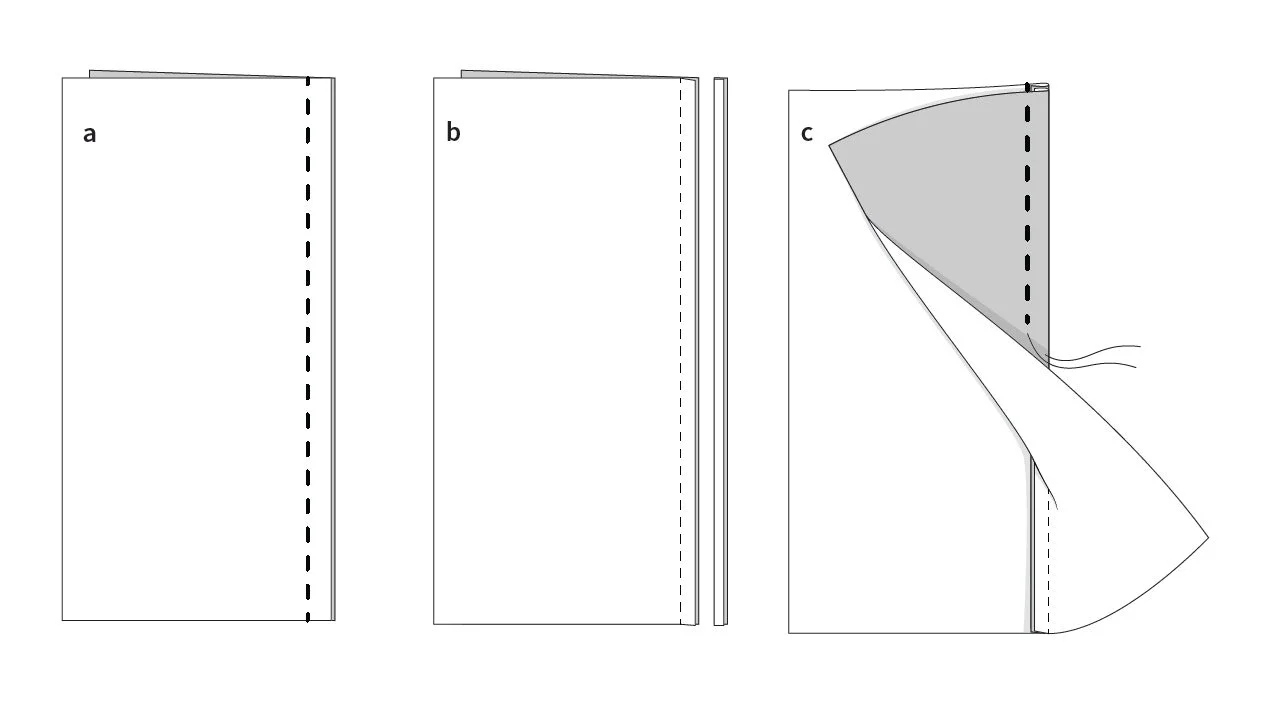
How to sew a French seam:
a. Pin the pieces you are joining together with wrong sides together. Stitch with a 6mm (¼in) seam allowance.
b. Trim the seam allowance down by half to 3mm (⅛in). Take care to remove any loose threads along the seam allowance, as these can poke through the finished seam. Press the seam allowance to one side.
c. Turn the pieces so the fabric now has right sides together, with the raw edges sandwiched between the two layers. Pin and stitch another seam, enclosing the raw edges, with a 6mm (¼in) seam allowance. Press the seam allowance flat to one side as directed in your pattern instructions.
French seams work best on straight or gently curved seams. For heavily curved seams, you may need to clip the seam allowance before completing step c.
This technique is recommended in the Whitlow robe instructions for light to midweight fabrics. [Download the free Whitlow robe pattern here.]