
THE Q & A SERIES
WhAT IF YOUR AMBITIONS ARE BIGGER THAN YOUR SKILLS?
What if your ambitions are bigger than your skills, so you get discouraged? How do you stay within reasonable boundaries while still holding onto bigger ideas for your projects?
Marsha
United States
Hi Marsha,
I think this is something so many of us wrestle with, and I feel like it's what my whole business ethos has been based on. Sewing is such a rewarding hobby, but it can also be very frustrating. Fabric is expensive. Tracing a pattern, cutting the fabric and then sewing it up all takes a lot of time, so when it doesn't work out quite how we pictured it, it can be very disheartening.
Learning new skills is hard and can be intimidating. When I launched Curated (the project subscription we ran between 2021 and 2025), I wanted to structure our learning so we could break the bigger projects down and we could focus on one thing at a time, rather than try to learn it all at once.
Break the project down
Thinking about this made me think about how I learned to drive a car. We started in an empty car park, just getting used to the accelerator, brakes and steering wheel and slowly but surely worked our way up to driving next to other cars, busier roads, parallel parking and freeways. A few years later, learning to drive a manual car, I only had to focus on the clutch and the gears as everything else was already second nature. I wasn't trying to learn everything at once. I was picking up a couple of things at a time, starting with the simpler skills and building from there.
The same applies to learning new sewing skills in order to make a more ambitious project.
As an example, here’s how I would break down making a pair of jeans, which can seem pretty daunting for a lot of makers.
Make a toile to check the fit. This means that the stakes are automatically low. You are using calico (or something similar) that is cheap and accessible. You won't be finishing your seams properly. You may even ignore details such as pockets altogether. This means you can just focus on working with one skill, and that is fit.
Practise topstitching on some denim scraps. This way you can get a hang of the thread and see how your machine handles the layers of denim, without worrying about damaging the fabric or spending too much time unpicking. (Our Sewing Jeans Skills Kit + Burwood Tool Roll walks through this step by step, if you'd like a guided way in.)
Practise doing flat felled seams on scrap fabric. This means that you'll get comfortable with the technique, so that when it's time to do it on your jeans, you'll feel confident and will have found your preferred way of doing it.
Consider making something else from denim to practise all your new skills. You may want to have a real practice run to combine all the skills, but still in a lower stakes way. You might make a cushion cover out of scraps of denim, or a pair of denim shorts out of some cheap or thrifted denim.
Finally, make the jeans. By the time you make the jeans, you should be feeling confident in a whole lot of skills, and they're all skills you've already practised. Not only does this mean you have a better chance of being happy with the outcome, it also makes the whole experience more enjoyable, because you can just relax into the process. You won't be wondering, "Is this going to fit me?" or "Did I just do that flat felled seam right?"
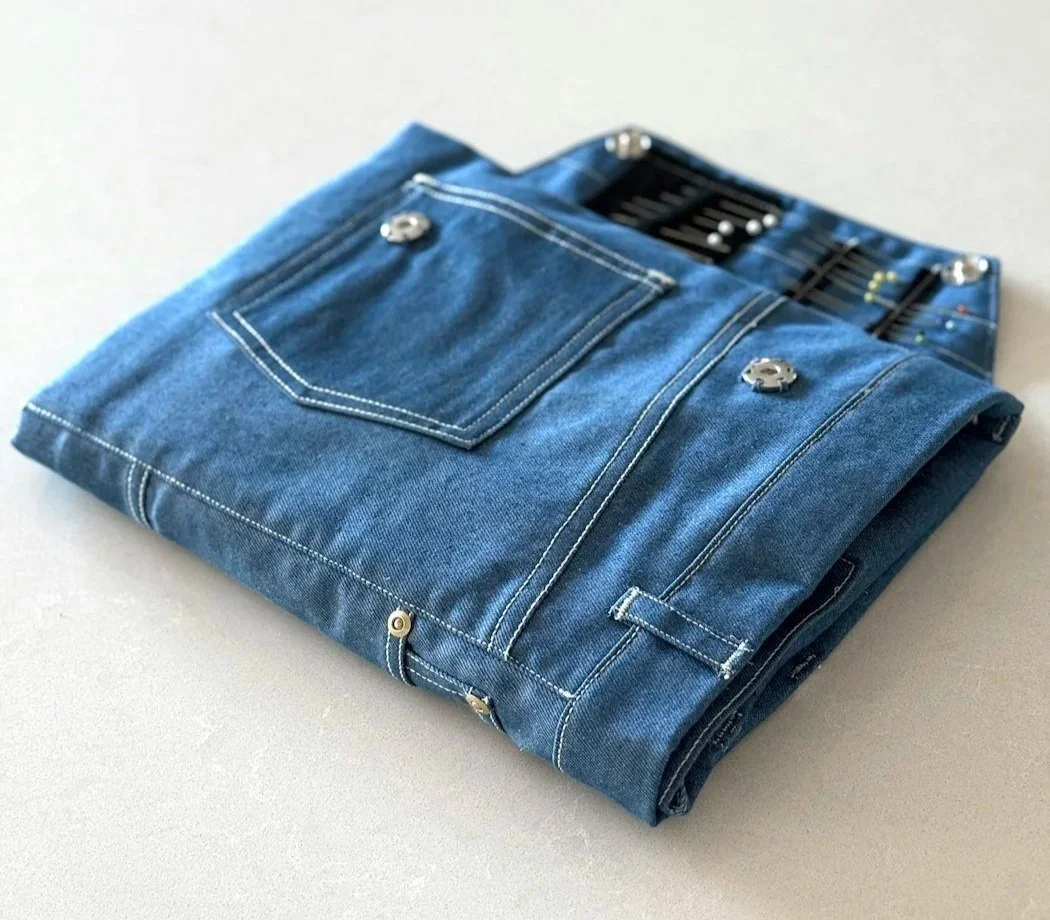
Burwood Tool Roll
projects that build SKILLs
Making pants that fit: Pants Making Series
Learning how to sew with knits: Sewing Knits Series
Make a pair of jeans: Sewing Jeans Skills Kit & Burwood Tool Roll
Make a button up shirt: Shirt Making Series
Learn how to make a coat: Coat Making Series
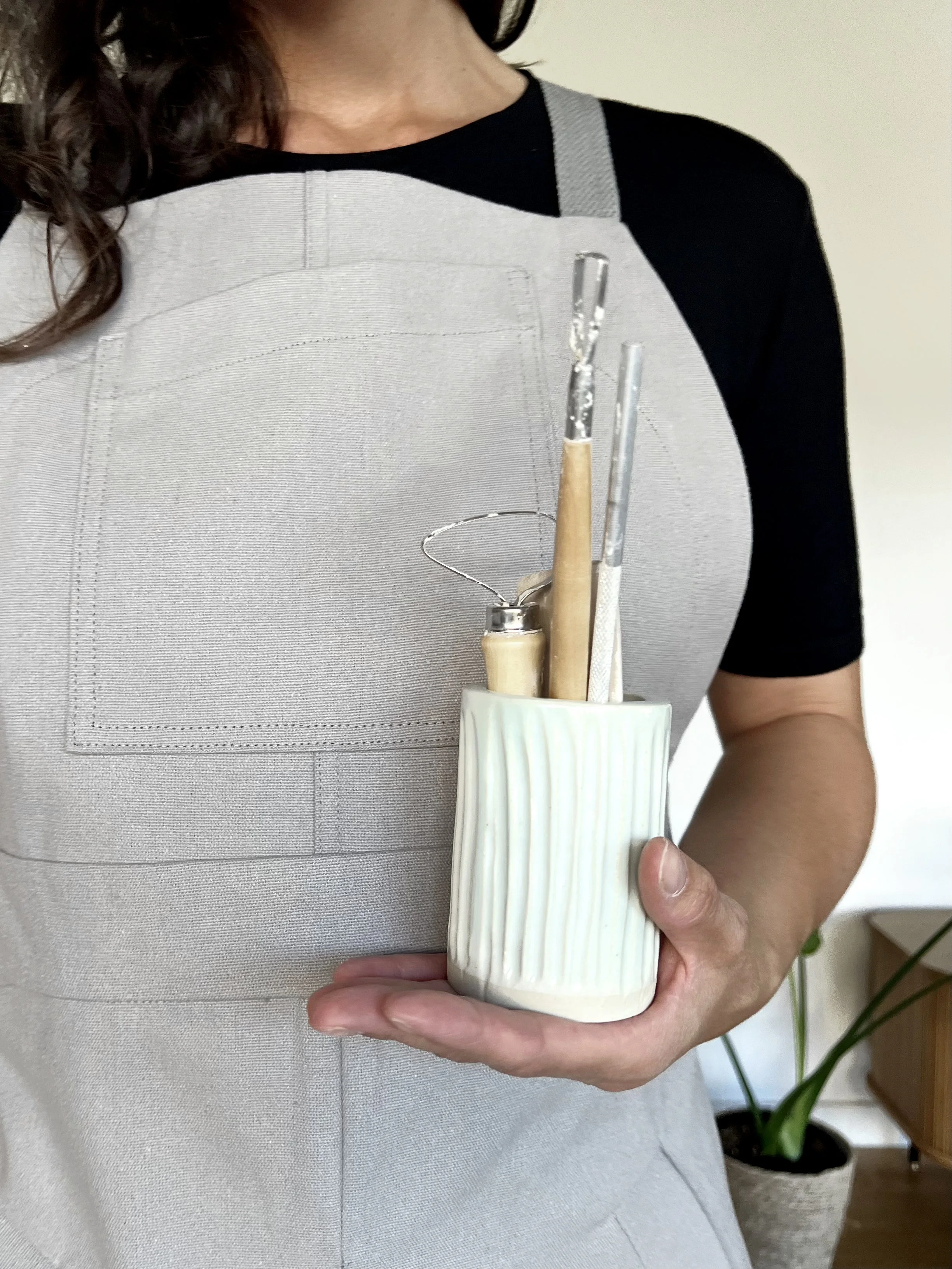
Sewing Coats Skills Kit + Ormond Apron Pattern
Or, focus on just one skill at a time
Another approach is to focus on one skill at a time, within a single project. For example, you may want to focus on fit. Pick a garment that will help you learn some adjustment techniques, but will be an easy enough sew. Alternatively, you may want to try out some fancy finishing techniques, in which case it might help to avoid worrying about fit by making a boxy top, a loose fitting dress or an elastic waist skirt.
When a project doesn't go to plan, reflect rather than judge
The previous examples might make it sound like skill building is a completely linear process. It certainly isn't!
Even after doing all the prep, making toiles, practising seams and so on, sometimes a project still ends up feeling like a flop. The fabric you chose just isn't quite right, the fit isn't what you expected, or a garment just doesn't feel good. This is when taking some time to reflect on the process can help you reframe it and feel less disappointed. Even if something isn't wearable, there are still lessons you can take into your next project.
What did this project teach me that I couldn't have learned without making it?
Which part felt harder than I expected, and why?
If I made this again, what is one thing I would do differently?
Did I learn something about my preferences, my body or the way I like to work?
What new skill or piece of knowledge can I carry into my next project?
If a friend had made this, what would I encourage them to celebrate?
Is there a part of this project I can reuse, repurpose or revisit later?
What would success look like if I measured it by the learning, or the time I enjoyed in my hobby, instead of the finished object?
Remember, it's a long game
Skills grow through making. You may watch something on YouTube and it looks like something you could easily do, but you give it a try and it's much harder than it looks. That's normal! Your hands are learning a new skill. If you only ever attempt things you're already good at, you never expand your capabilities. The trick is to stretch yourself just enough that you stay curious and excited, without getting overwhelmed.
For a lot of us, we're hoping that sewing will be a hobby for life. It's not something we're picking up for a week or two before moving onto something else. It's okay for it to take time to improve.
I have talked about this quote before, and I'll do it again, because there's one quote by the podcaster Ira Glass that I have returned to over and over when I'm feeling frustrated by learning something new.
"Nobody tells this to people who are beginners, I wish someone told me. All of us who do creative work, we get into it because we have good taste. But there is this gap. For the first couple years you make stuff, it's just not that good. It's trying to be good, it has potential, but it's not. But your taste, the thing that got you into the game, is still killer. And your taste is why your work disappoints you. A lot of people never get past this phase, they quit. Most people I know who do interesting, creative work went through years of this. We know our work doesn't have this special thing that we want it to have. We all go through this. And if you are just starting out or you are still in this phase, you gotta know it's normal and the most important thing you can do is do a lot of work. Put yourself on a deadline so that every week you will finish one story. It is only by going through a volume of work that you will close that gap, and your work will be as good as your ambitions. And I took longer to figure out how to do this than anyone I've ever met. It's gonna take awhile. It's normal to take awhile. You've just gotta fight your way through."
Happy sewing,
Emily
For more issues of the Q & A series, you can check out the archive here.